


advantages Of low-carbon concrete
This course equips you with the knowledge of how different materials and processes influence carbon outcomes to make concrete more sustainable. Discover proven strategies for reducing emissions in production and implement more sustainable design choices.
Carbon emissions in concrete construction
In this section of the online course, we will look at basic equations for embodied carbon and learn step by step how they can be used to calculate and specifically reduce the embodied carbon of construction projects.
Levers for low-carbon cement and concrete
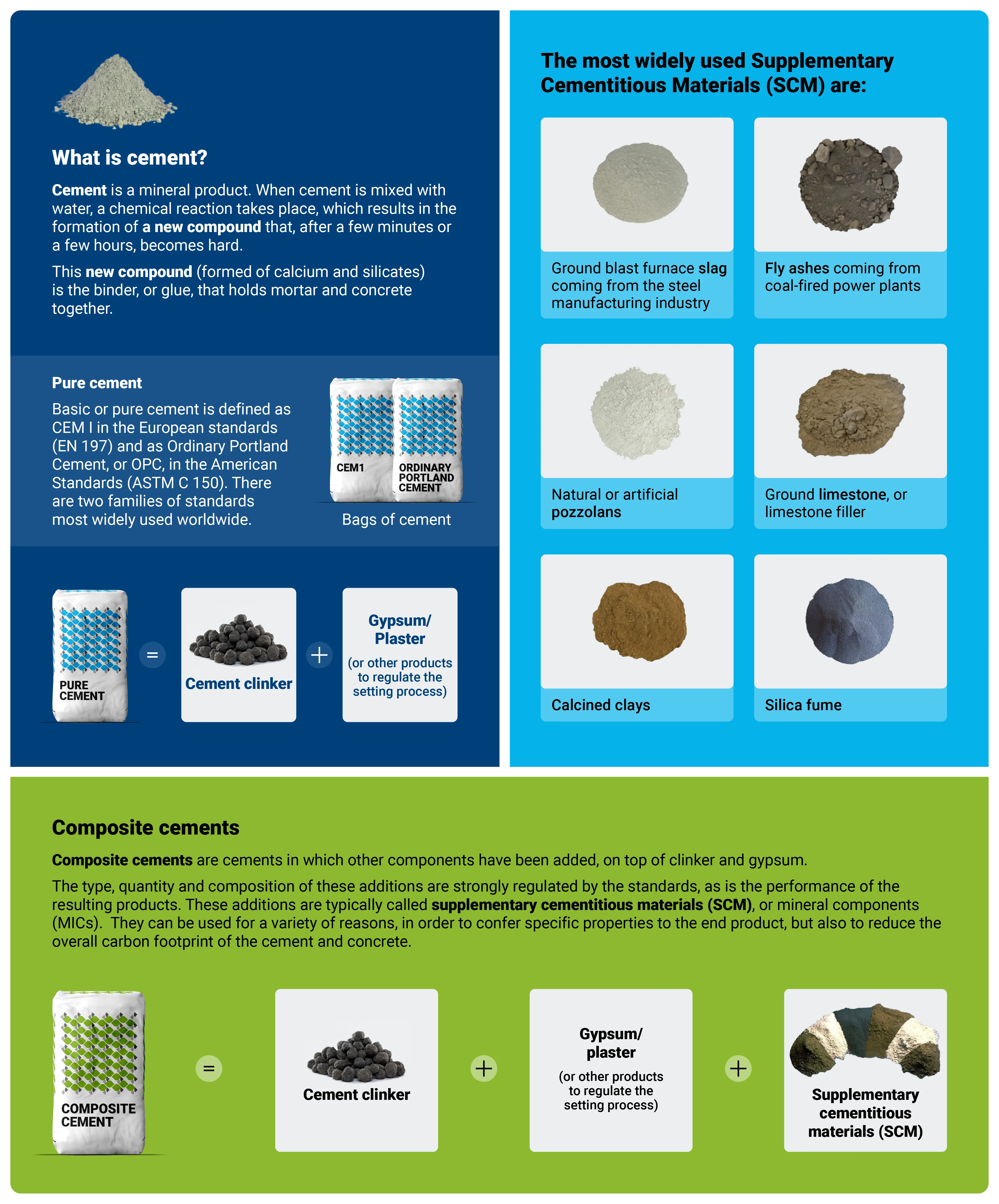
Learn more about the combination of raw materials that produce cement-based products.
Calcined clay cement and concrete
Watch the following video which explores how composite cement and supplementary materials are revolutionising the industry, paving the way for lower-carbon alternatives.
Specifying low-carbon concrete
Watch this video where leading sustainable engineers, Paul Astle and Brogan MacDonald from Ramboll, unpack frequently asked questions on low-carbon concrete.
Embodied carbon and material efficiency
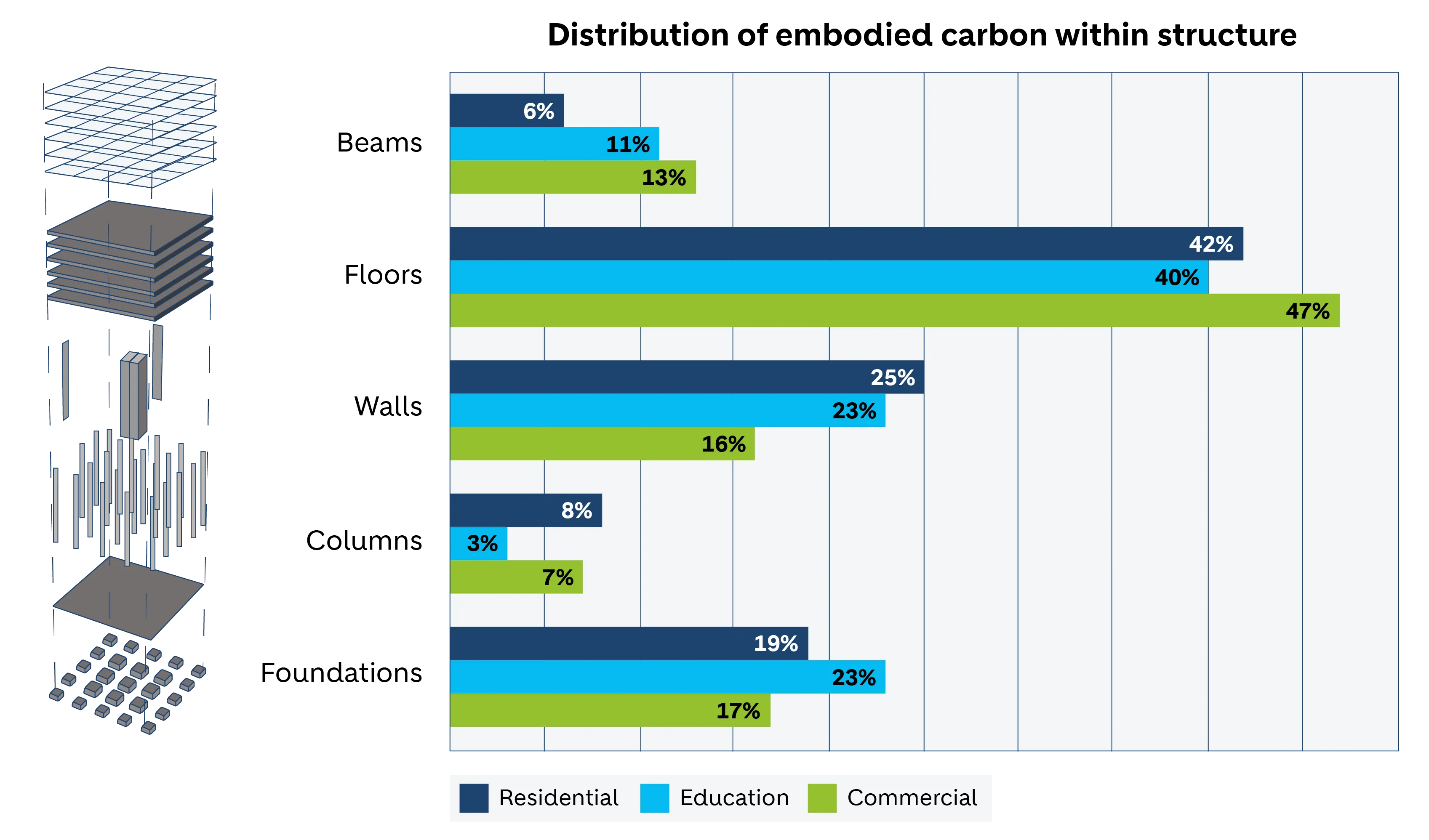
As the following graph shows, floor slabs are usually the structural element that contributes most to a building's carbon content. A key learning objective of this part of the course is to identify such key drivers and address them in a targeted manner.
Designing for material efficiency
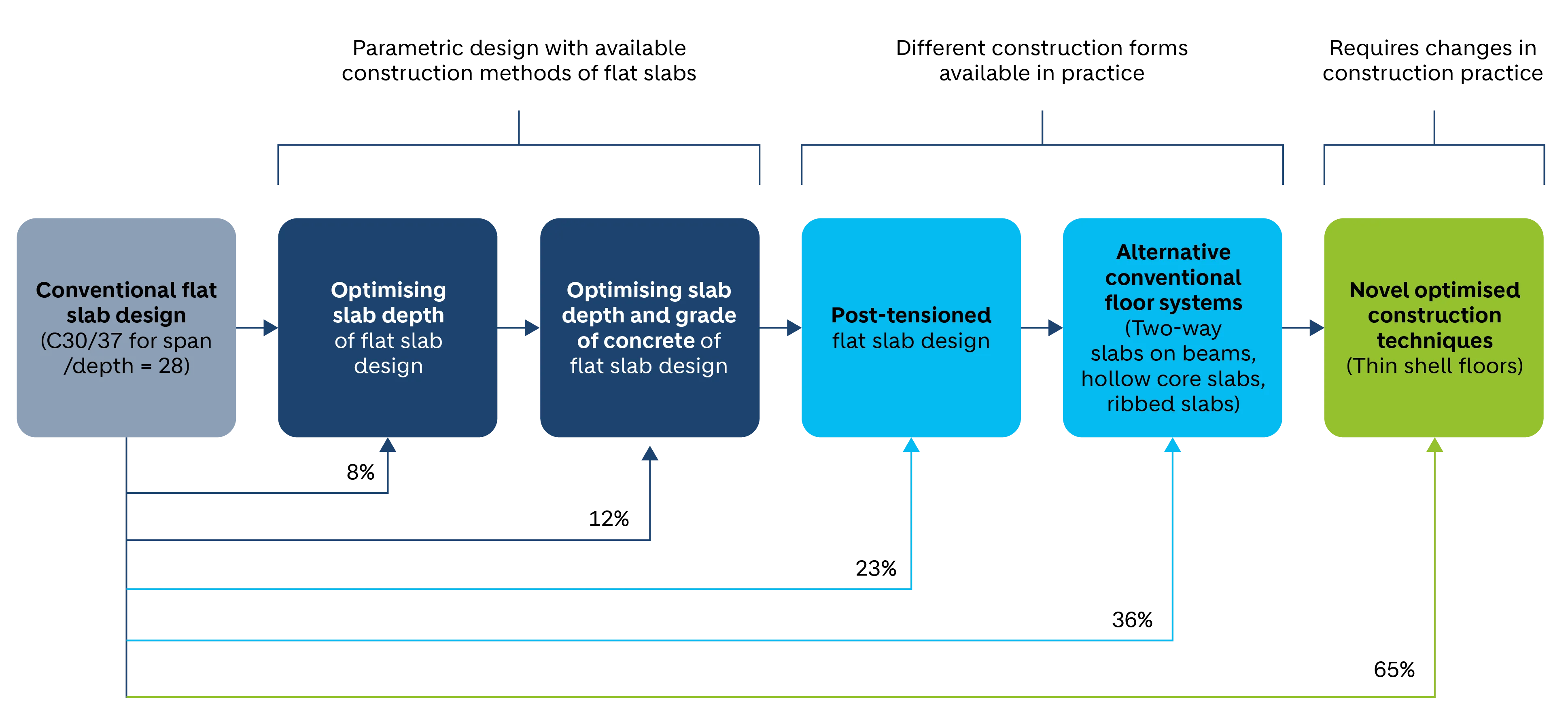
Learn about different categories of resource-efficient floor slab designs based on the difficulty level of application and their respective carbon reduction potential.
SEE OUR Case Study: Rippmann Floor System
Watch the video of Prof. Dr. Philippe Block explaining how the Rippman Floor System works.
Carbon Capture Utilization and Storage (CCUS)
Watch the following video for an introduction to CCUS.

Do you have any questions or need expert advice?